Finding My Way to Pre-Med at Cornell as a First-Gen, Low-Income Student

I didn’t come into Cornell knowing I was pre-med. Actually, I wasn’t even sure I was allowed to say I was pre-med yet. I just knew I was curious about how the environment affects people. And somehow that slowly turned into medicine.
I came to Cornell through the Pre-Collegiate Summer Scholars Program (PSSP), which is a summer transition program before your first year. About 200 of us were there. We took classes, explored campus, and tried to act like we weren’t nervous. I remember thinking: Okay… maybe I can actually do this. But two months earlier, I had no idea where I was going to college.
Ivy Day was rough. I opened decisions one by one. Rejection. Waitlist. Rejection. By the time I opened my Cornell decision, I didn’t really know what to expect anymore. Then I saw:
My first reaction wasn’t excitement. It was honestly, wait… is this real? I stared at the screen. Refreshed it. Checked again. Called my sister. Called my mom. Checked the portal again. Only after all that did it start to sink in.
I was going to Cornell. I was excited. Also scared. Also wondering if I was ready. Then I thought about something my mom told me in 7th grade: "Now you have more education than your mom." Back then I didn’t really know what that meant. Now I think I do.
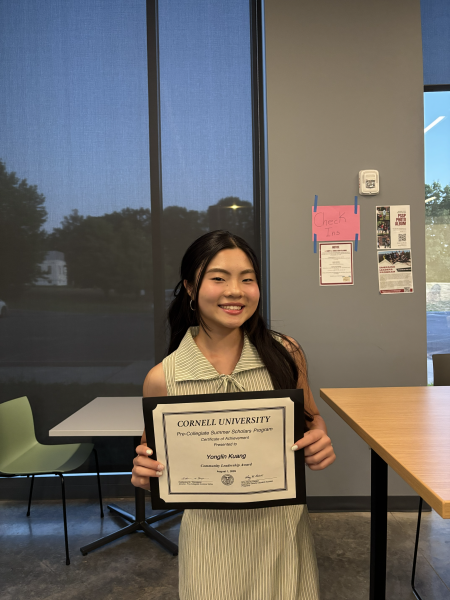
People always say being first-generation is something to be proud of. And it is. But sometimes it also just feels… uncomfortable. Like you walked into a place and forgot to check if you belonged first. Nobody told me I didn’t belong. That wasn’t it. It was just this quiet feeling of being different. I didn’t always talk about being low-income either. Not because I was told not to. Just because I didn’t know how people would react.
That’s something people don’t really talk about. How you slowly decide what parts of yourself to share. Cornell actually helped with that more than I expected. Places like the Office of Academic Discovery and Impact (OADI), Educational Opportunity Program (EOP), and First-Generation and Low-Income Support gave me spaces where I didn’t have to explain everything. People just understood. That helped more than I expected.
I came in as an Environment & Sustainability major because I liked environmental science and education. That was it; no big master plan. But in my classes, whenever we talked about pollution or climate disasters, I kept paying attention to the same thing: What happens to people? Who gets sick? Who is most affected? Who gets help? Those questions kept coming back. I didn’t wake up one day and decide I wanted medicine. It was more like I kept following questions, and they led me there.
When I first started thinking about pre-med, I felt late. Like everyone else already knew the rules and I was just figuring out the game. First semester, I wasn’t even taking the main requirements yet. So, when people asked what I wanted to do I would say: "Maybe pre-med?" Which really meant: "I hope I'm not making this up."
I also worried people would think E&S wasn’t "serious enough" for pre-med. Over time, I realized something important, though. There isn’t a pre-med major, or just one type of pre-med student. Being interdisciplinary is probably one of my biggest strengths now.
Nothing dramatic happened; I didn’t suddenly become confident. I just slowly stopped feeling like an imposter. Talking to advisors helped, programs, like P3 helped. Meeting other students who also didn’t have everything figured out helped the most.
I still sometimes wonder if I'm doing enough. I just don’t panic about it the same way anymore. A professor once told me something simple: "There's no universal timeline for medicine." That helped more than any motivational quote ever did.
If you come to Cornell and feel unsure what you're doing, you're normal. Nobody really talks about that part, but it's true. You are allowed to:
You don’t have to be the most prepared person here; you just have to be willing to keep going. I still don’t have everything figured out. Not even close. But I’m not scared of that anymore because now I know that figuring things out is the process. And if you're coming here feeling unsure, too, you’re probably doing it right.