Studying Abroad in Rome

As an architecture student, it feels like a dream to live in a city that is a palimpsest. One of the most compelling aspects of studying architecture in Rome is how quickly the extraordinary becomes familiar. I walk past monumental buildings I once spent hours analyzing, on my way to class and see the Pantheon multiple times a day, while walking to meet friends or getting an evening gelato. What once felt distant and carefully studied becomes part of my daily rhythm. As architecture students, we spend hours analyzing these buildings in drawings and lectures—but in Rome, I encounter them constantly, almost casually.
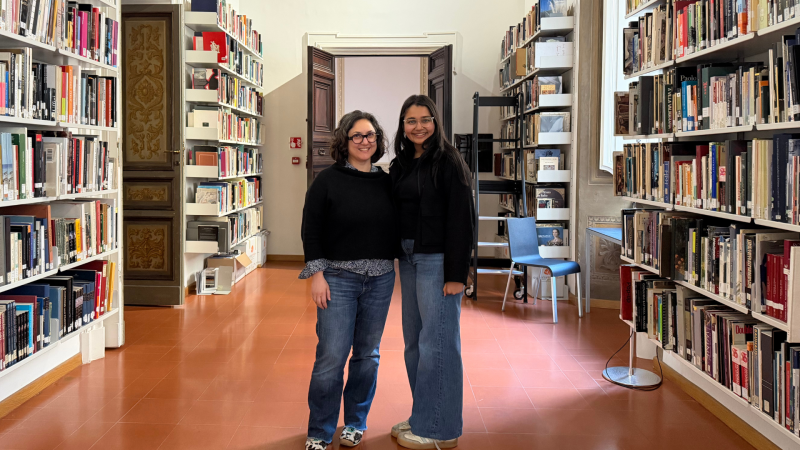
The program is housed on the piano nobile - the first floor, historically the most noble level - of Palazzo Santacroce, a 17th-century palazzo in the historic center. Our studios unfold beneath frescoed ceilings framed by gold ornamentation, while tall windows open onto a quiet piazza. As I sketch sections or build models, I hear music drifting up from below and the steady rhythm of water from the fountain in the square. The library stretches the length of a vaulted hall, lined with books on architecture, art, planning, and history beneath a frescoed barrel vault. Working in the palazzo feels inseparable from the history that surrounds it.
History lessons rarely stay contained within four walls. Classes turn into walks through the city, tracing how modern streets overlay ancient and medieval infrastructure. Field trips take us across Italy: from climbing the Duomo in Milan to descending into the catacombs of Naples and staying in cave-dwelling hotels in Matera. Each experience expands my architectural frame of reference in ways no lecture alone can. I began to understand that architectural education is not only spatial, but also sensory, geographic, and deeply tied to the culture that produces the buildings we study.
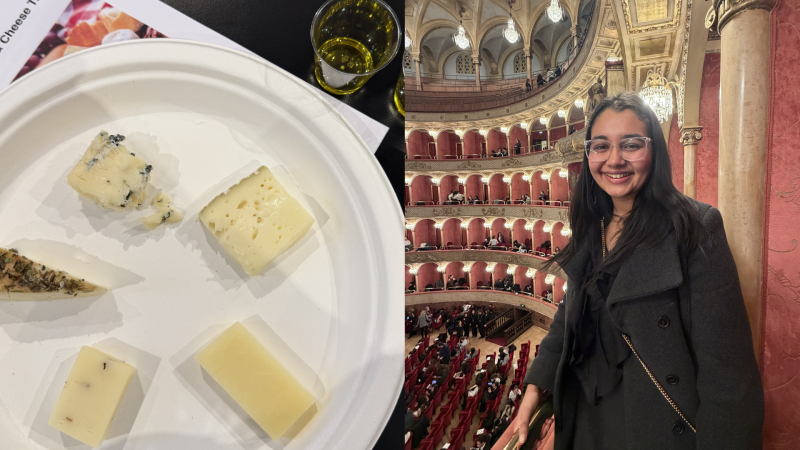
That sensory dimension carries throughout the semester. Wine tastings, olive oil and cheese sessions (left photo below), and evenings at symphony and ballet performances (right photo below) are not extras, but part of learning how to read a city.
Living here means adjusting to a different rhythm of everyday life. Over time, I found my routine: a morning cappuccino at my favorite neighborhood café, a comfort restaurant that knows exactly how to make my Jain eggless pomodoro, and a familiar route for evening walks through narrow streets. These small rituals begin to anchor me in the city.
What I do not expect is how much this experience has been shaped by the people around me. Navigating a new city together creates a shared understanding difficult to replicate elsewhere, and these relationships have become one of the most meaningful parts of the semester.
Rome no longer feels like a place I am visiting, but a place I understand. By the end of the semester, Rome becomes more than a backdrop to my architectural education. It becomes a place that reshapes how I see buildings, cities, and even myself - layered and constantly reinterpreted.